Sparkium
Sparkium is a standardized schema for structuring eLearning materials, enabling materials to be managed consistently and migrated across LMS platforms through Sparklink.
How does Sparkium work?
Sparkium organizes eLearning materials in a structured file system using text-based, human-readable formats. This makes content easier to access, transfer, and reuse across systems, while reducing vendor lock-in and enabling better change management, quality assurance, and automation.
Your Sparkium project
Moodle and other systems
Material 1
Who is Sparkium for?
Sparkium is made for anyone working with eLearning materials:
For individuals
Do you want to update your course materials without going through the hassle of editing inside LMS?
Sparkium allows you to edit your eLearning materials locally, and deploy them to your LMS when ready, making it easier to keep your courses up-to-date.



For organizations
Do you miss the days when schools bought textbooks directly from you?
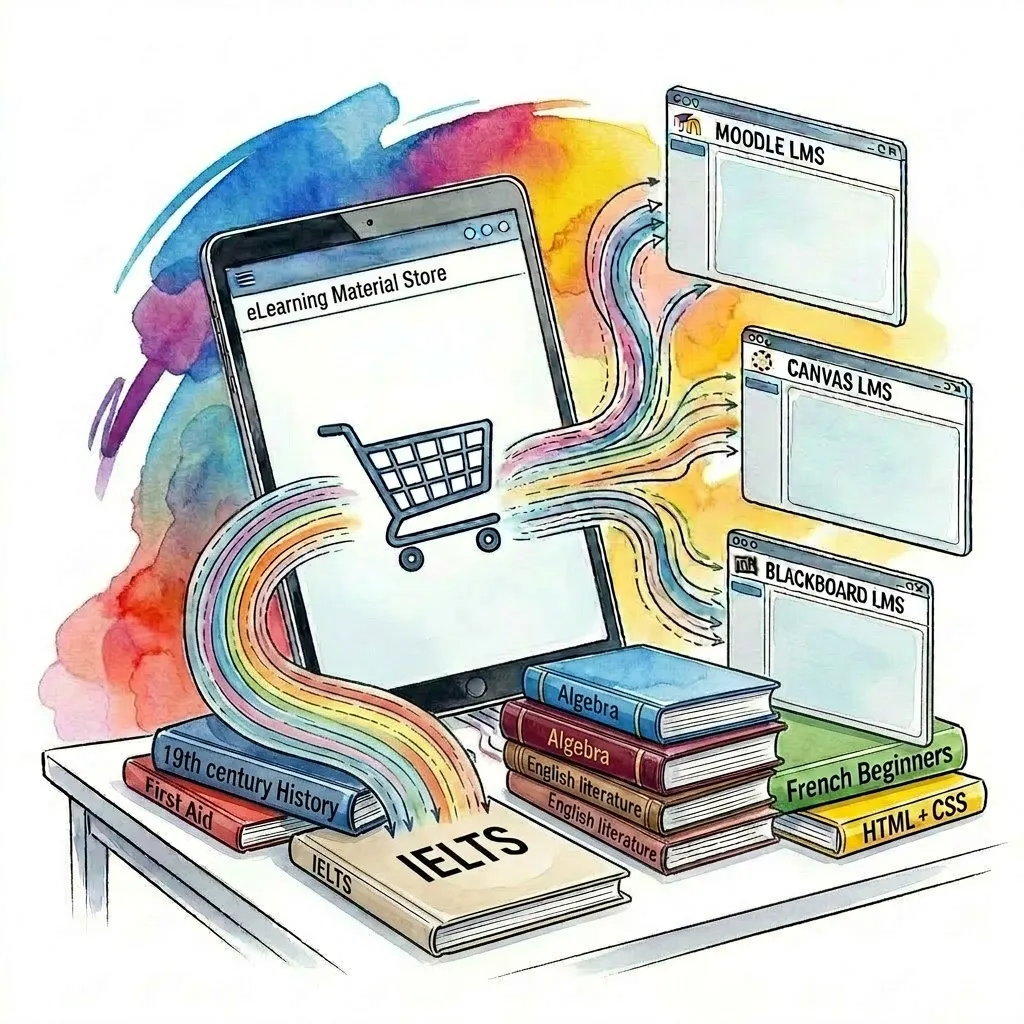
Sparkium helps you bring that model into the digital era. Create eLearning materials once and deliver them to different LMS platforms like Moodle, making your product easily be sold and launched on customers’ LMS.


Does this sound like you? Have a try and see how Sparkium can help you to create, manage and distribute your eLearning materials more efficiently!
Why use Sparkium?
Sparkium is designed to tackle your pain points of building eLearning materials.
Human-friendly text-based file formats
Use human-friendly text-based file formats to store your eLearning materials, making it easy to read, edit and maintain. You can use any text editor to work with your eLearning materials, and you can easily track changes and collaborate with others using version control tools like Git.
- Use Markdown to write your course content
- Use YAML or JSON to define your course structure and metadata
No need to learn complex XML or proprietary formats and waiting for Microsoft Word to load!
Support for multiple languages
Provide your eLearning materials in multiple languages and reach a wider audience.
- Supports as all languages and dialects
- Assist translation and localization by being able to use machine translation tools
No need to fiddle around with complex localization features in your LMS or create separate courses for each language!
Modular, portable and reusable design
Design your eLearning materials in a modular and reusable way, so you can easily reuse and adapt existing courses for different clients and use cases.
- Reuse parts of your materials across different courses
- Share and collaborate on course modules with others
No need to copy and paste content across different courses or create separate courses for each use case!
Change management and quality assurance
Track, compare, and manage changes to your eLearning materials using version control tools like Git, making it easier to maintain and update your courses.
- Track changes to your eLearning materials over time
- Collaborate with others to review and improve your materials iteratively
No need to worry about losing track of changes or having broken links in your course materials!
Platform agnostic and interoperable
By separating your eLearning materials from the LMS, Sparkium allows you to export, modify and re-upload your eLearning materials to different LMS platforms that support Sparkium, giving you more flexibility and control over your content.
Vendor and platform lock-in prevention
Having your eLearning materials stored in a structured file system and text-based formats allows you to avoid being locked into a specific LMS or platform, giving you more freedom and control over your content.
Assistance and automation possibilities
Due the nature of Sparkium’s file formats, you can easily use AI tools to assist you in creating and maintaining your eLearning materials, and automate parts of your content workflow.
Sparkium, what else?
We are not the first one with this ideas, but we believe that Sparkium’s approach is superior and more practical than the existing solutions.
Comparison of schemas
SCORM and xAPI are the most widely used standards for eLearning materials, but they are complex. Their focus is on packaging and data tracking, which can be limiting and inefficient for content creation and management. Sparkium, on the other hand, focuses on content creation and management, making it more intuitive and user-friendly for educators and content creators.
| Schema comparison | SCORM | xAPI | Sparkium |
|---|---|---|---|
| Adoption | Widely adopted | Growing adoption | Emerging standard |
| Meta data | Complex XML format | Complex XML format | Readable YAML/JSON format |
| Content format | Complex HTML format | Complex JSON format | Human-friendly Markdown format with front matter |
| Structure | Rigid and complex | More flexible but still complex | Intuitive by using folders and files |
| Focus | Package-centric | Data-centric | Content-centric |
Comparison of eLearning material creation approaches
Most eLearning materials are created directly inside LMS platforms, which can be limiting and inefficient. Sometimes also just file-distribution platforms like Google Drive or Dropbox are used to share course materials.
| Approach comparison | Static files (e.g. Google Drive, Dropbox) | Directly inside a LMS (e.g. Moodle, Blackboard) | With a schema |
|---|---|---|---|
| Where materials lives | Inside proprietary files (e.g. .docx, .pdf) | Inside LMS database | Inside structured file system and text-based formats |
| Editing experience | Editing inside proprietary software (e.g. Microsoft Word) | Editing inside LMS content editor | Editing with any text editor and version control tools |
| Updating eLearning materials | Manual editing and sharing new versions of files | Manual editing inside LMS content editor | Edit locally and deploy to LMS when ready |
| eLearning materials reuse | Limited reuse due to proprietary formats | Limited reuse within the same LMS | Easy reuse across different platforms and courses |
| Portability | Low portability due to proprietary formats | Low portability within the same LMS | High portability across different platforms |
| Transparency | Low transparency due to proprietary formats | Low transparency within the LMS | High transparency due to open and readable formats |
| Ownership | Limited ownership due to proprietary formats | Limited ownership within the LMS | Full ownership of content and structure |